- Hebei Africa Machinery Co.,Ltd.

- HBA Machinery
- Shijiazhuang, Hebei, China
- +(86) 137 0321 6380
- hbamachinery@china-hba.com

Industry News
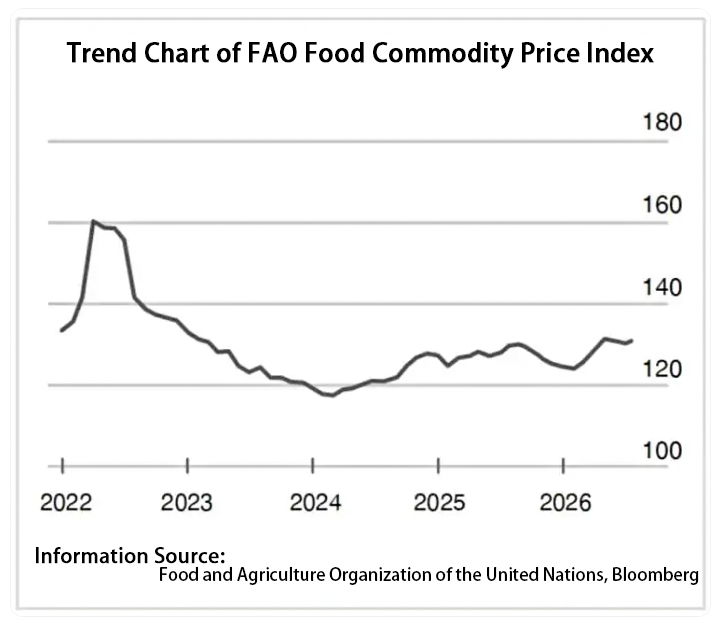
FAO: Global food prices hit a nearly‑three‑year high
(Global Times Comprehensive Report) "Global food prices have hit a nearly‑three‑year high as heatwaves and warfare drive up crop‑related costs," Britain's The Guardian reported on the 8th, citing data from the Food and Agriculture Organization of the United Nations. The agency’s food commodity price index climbed to 131.1 points in July from 130.3 points in the prior month. Falling prices for meat and dairy products were insufficient to offset price gains for cereals, sugar and vegetable oils.
Data shows that grain prices rose by 3.4% month‑on‑month in July. Among them, global wheat costs climbed 5.8%, representing a nearly 10% increase compared with a year earlier. Analysts state that the ongoing Russia‑Ukraine conflict has heightened worries over supplies from crucial Black Sea grain‑producing regions, pushing wheat prices to a two‑year high in July. Meanwhile, hit by extreme heat, Europe is heading toward one of its worst‑on‑record grain output drops. Major United States producing areas are also plagued by drought, yielding disappointing corn and soybean harvests, and global corn prices have risen by 3.6%.
A Guardian report notes that the deadly heatwave sweeping across Europe in June is estimated to have forced grain farmers to destroy roughly 9 million tonnes of crops including wheat, barley, maize and oats. The 9‑million‑tonne production cut means the 27 European Union member states and the United Kingdom are set to register their lowest harvest since 2018. The lost crop output surpasses the combined projected total grain production of Austria, Ireland and the Netherlands.
Besides, global sugar prices went up 5.6% in July, as the El Niño phenomenon threatens production in major Asian sugar‑producing nations such as India and Thailand. Data from S&P Global Energy also indicates that sugar output in the European Union and the United Kingdom is expected to drop to around 15 million tonnes, the lowest level since the 2015 production season. Vegetable‑oil prices increased by 2%, hitting their peak since June 2022.
Meat prices fell 2.8% in July, marking the first monthly decline this year. Dairy product prices slipped by 0.7%.
An analysis by the United‑States‑based Wall Street Journal holds that the near‑complete closure of the Strait of Hormuz has driven a sharp surge in fertiliser prices this year, stirring fears of far‑reaching shocks to the global food system. At the same time, expectations for a powerful El Niño weather event have amplified risks, which may disrupt harvests in key agricultural zones and further tighten worldwide supplies. Bloomberg remarks that global food‑market focus has largely shifted away from initial turbulence triggered by the United States‑Israel‑Iran conflict, toward poor harvest prospects, trade uncertainties and persistent weather‑related concerns.
A Guardian report notes that the deadly heatwave sweeping across Europe in June is estimated to have forced grain farmers to destroy roughly 9 million tonnes of crops including wheat, barley, maize and oats. The 9‑million‑tonne production cut means the 27 European Union member states and the United Kingdom are set to register their lowest harvest since 2018. The lost crop output surpasses the combined projected total grain production of Austria, Ireland and the Netherlands.
Besides, global sugar prices went up 5.6% in July, as the El Niño phenomenon threatens production in major Asian sugar‑producing nations such as India and Thailand. Data from S&P Global Energy also indicates that sugar output in the European Union and the United Kingdom is expected to drop to around 15 million tonnes, the lowest level since the 2015 production season. Vegetable‑oil prices increased by 2%, hitting their peak since June 2022.
Meat prices fell 2.8% in July, marking the first monthly decline this year. Dairy product prices slipped by 0.7%.
An analysis by the United‑States‑based Wall Street Journal holds that the near‑complete closure of the Strait of Hormuz has driven a sharp surge in fertiliser prices this year, stirring fears of far‑reaching shocks to the global food system. At the same time, expectations for a powerful El Niño weather event have amplified risks, which may disrupt harvests in key agricultural zones and further tighten worldwide supplies. Bloomberg remarks that global food‑market focus has largely shifted away from initial turbulence triggered by the United States‑Israel‑Iran conflict, toward poor harvest prospects, trade uncertainties and persistent weather‑related concerns.
The situation is especially tough for people enduring severe food insecurity. The United Nations World Food Programme warns that the El Niño weather event could plunge an extra 50 million people across the globe into acute hunger by the end of next year. (Qian Fan)
Industry‑wide business opportunities: Grain and oil processing plants in multiple countries have an urgent demand for upgraded refining and flour‑making equipment. Countries across North Africa and the Black Sea rim are seeing growing needs for flour production‑capacity expansion.

Get The Latest Quote